

Dover Park Hospice

Research

Are you interested in doing reseach with us at DPH? We welcome students, clinicians, and researchers who are interested in advancing knowledge in palliative care. Through internships, collaborations, and mentorship, Dover Park Hospice supports research that improves care for patients with serious illness and their families

Internship

Students and healthcare professionals may apply for short-term research internships to gain exposure to palliative care research. Interns may assist with literature reviews, data collection, analysis, or manuscript preparation while working alongside clinicians and researchers involved in ongoing projects.

Collaboration

We welcome collaboration with academic institutions, healthcare organisations, and researchers interested in palliative care. Collaborative projects may include clinical research, service evaluation, education research, or innovation in models of care.

Mentorship

Mentorship is available for students and early-career researchers who wish to develop their research skills. Guidance may include research design, ethics applications, data analysis, and manuscript writing, particularly for honours or academic research projects conducted in partnership with universities.

Click on the button below to submit your enquiry on our research internship or mentorship:

Our Works

Posters
Implementation of a 5/6 –Day Work Schedule for Nurses in a Singapore Hospice: A Pre-and Post-Implementation Survey Study

Top Poster Presentation Award for the Scientific Competition under the Track: Positive Practice Environment at the Inaugural National Healthcare Group (NHG) Nursing Conference, 2025

Spirituality in Palliative Care - What Our Patients Tell Us

Best Poster Award at the 16th Asia Pacific Hospice Palliative Care Conference, 2025

What predicts the final place of care in people with advanced dementia?
Factors associated with family caregiver burden of home-dwelling patients with advanced dementia
Final Place of Care: Determinants of Patients with Advanced Cancer Receiving Integrated Home-based Palliative Care
It takes a village: Collaborations for virtual volunteering in a hospice during COVID-19
Telehealth music therapy in end-of-life care during COVID-19: Two retrospective case studies in a hospice
Impact of a specialised palliative homecare programme for advanced dementia: Comfort and satisfaction with care at the end-of-life
Presentations
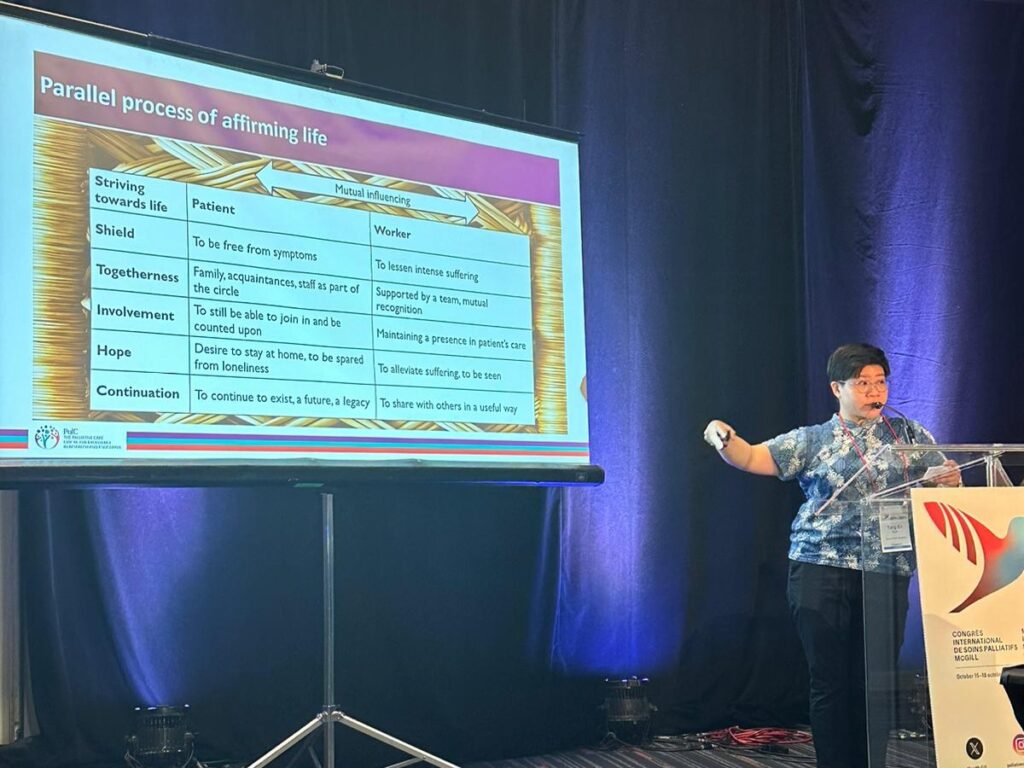
A Home Palliative Care Social Worker’s Helplessness in the Face of a Patient’s Existential Distress and Suffering: A Case Report
Presented by Koh Tang En at the 2024 McGill International Palliative Care Congress | 15-18 October 2024

Existential distress is notable in palliative care patients, particularly those with disfiguring life-limiting illnesses. This results in palliative care workers experiencing helplessness while witnessing patient's suffering. Our speaker, Dover Park Hospice senior medical social worker Koh Tang En, shared more about her journey with a cancer patient experiencing disfigurement. A palliative care worker's experience of helplessness encompasses the cause (witnessing suffering), compounding factor (non-recognition of helplessness), and alleviating factors (life affirmation, mutual recognition, and gratitude). Interwoven recognition between patients, families, workers, and organisations could strengthen each other as a form of healing.
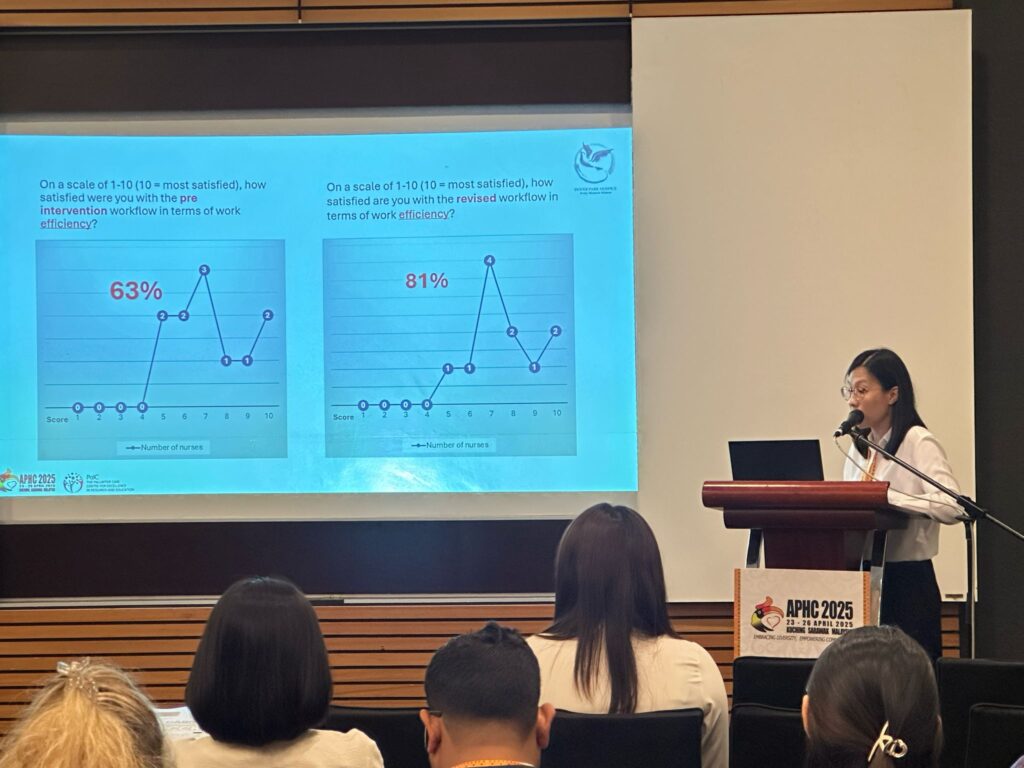
“On the go solo, with a seamless flow” – Real time Tele-verification System in Community Palliative Care for Controlled Drugs (CDs)
Presented by Koh Xin Ye at the 16th Asia Pacific Hospice Palliative Care Conference in Kuching, Malaysia | 24 April 2025

Palliative care nurses play a critical role in managing end-of-life symptoms for patients who are cared for at home. Controlled drugs, backed by strict protocols and safe practices, are essential for symptom management. Dover Park Hospice Home Care Nurse Ms Koh Xin Ye, presented on the real-time tele-verification system practices and revisions implemented for safe, accurate and efficient dispensing and administration of controlled drugs to our home care patients. The findings show that the revised workflow increases the accuracy of the medication order and reduces risk of medication error while maintaining safety and efficiency.
Published Papers
2025
Predictors of Final Place of Care in People With Advanced Dementia Receiving Home-Based Palliative Care in Singapore: A Multivariate Regression Analysis
From Grief to Resilience: Supporting the Palliative Care Team’s Healing Process after a Patient’s Suicide
The Role of Nebulized Lidocaine in Managing Cough in Lung Cancer in an Inpatient Setting – A Case Series
Using Nebulised Glycopyrronium Bromide for Refractory Terminal Secretions in an Inpatient Hospice
2024
Factors associated with the place of death of persons with advanced dementia: A systematic review of international literature with meta-analysis
The effectiveness of a silicone tape intervention in reducing N95 mask-related pressure injuries for healthcare professionals in an inpatient hospice setting
2022
Telehealth Music Therapy in End-of-Life Care in Response to the COVID-19 Pandemic: Two Descriptive Case Reports
Virtual volunteering during the COVID-19 pandemic: case studies of virtual animal-assisted activities in a Singapore hospice
Factors Associated With Family Caregiver Burden of Home-Dwelling Patients With Advanced Dementia
2021
Prognostication in Home-Dwelling Patients with Advanced Dementia: The Palliative Support DEMentia Model (PalS-DEM)
Predictors of the final place of care of patients with advanced cancer receiving integrated home-based palliative care: a retrospective cohort study
2020
Advanced dementia: an integrated homecare programme
Comfort and Satisfaction With Care of Home-Dwelling Dementia Patients at the End of Life
Integrated palliative homecare in advanced dementia: reduced healthcare utilisation and costs